
If you’ve ever managed a business online, you’ve likely asked yourself:
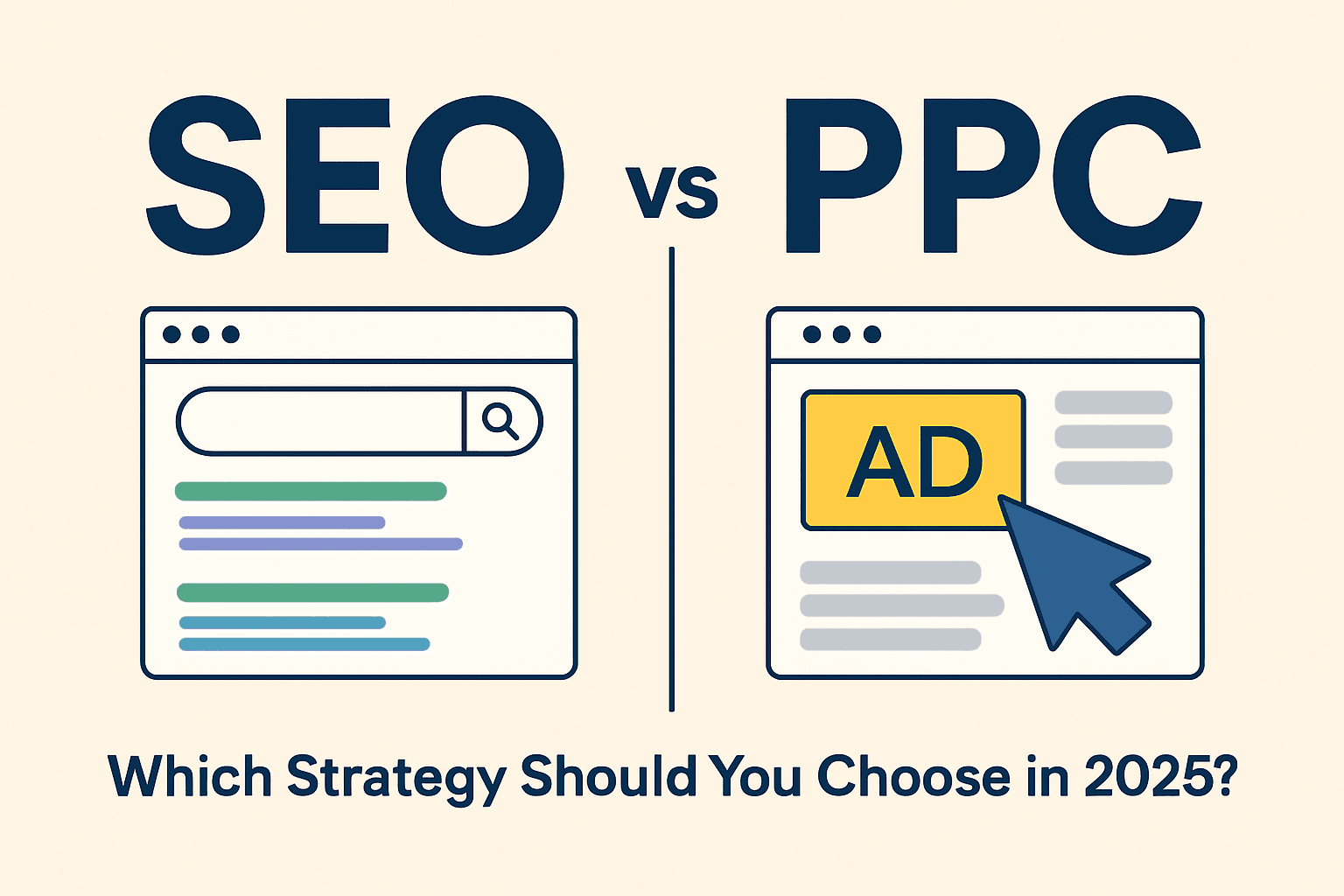
SEO vs PPC — which one actually works best?
In 2026, the decision is more complex than ever.
Ad costs are rising.
AI Overviews dominate search results.
Competition is intense.
Early in my journey, I faced this same choice.
Should I build SEO authority slowly?
Or pay for instant visibility with PPC?
It felt like choosing between a marathon runner and a sprinter.
Over time, I realized something important:
The smartest strategy is not choosing one.
It’s understanding both.
Table of Contents
ToggleSEO vs PPC: Which Is Better in 2026?
SEO is better for long-term growth and organic trust, while PPC is better for instant traffic and rapid testing. In 2026, the most effective strategy combines both: use PPC for speed and SEO for sustainable authority.
SEO vs PPC: What’s the Real Difference?
SEO builds long-term organic visibility.
PPC buys instant traffic through paid ads.
SEO compounds over time.
PPC delivers speed — but stops when spending stops.
Both serve different purposes.
SEO: The Marathon Strategy
Search Engine Optimization improves your website so it ranks organically.
Why SEO matters in 2026:
Builds trust and credibility
Generates sustainable traffic
Reduces cost per click long-term
Strengthens brand authority
However, SEO requires patience.
Results often appear within 3–6 months.
But once you rank, traffic continues without additional ad spend.
For fundamentals, see:
What Is SEO? A Beginner’s Guide to Search Engine Optimization
SEO is about owning visibility.
Not renting it.
PPC: The Speed Strategy
Pay-Per-Click ads provide immediate exposure.
You pay each time someone clicks.
Why PPC works:
Immediate traffic
Precise targeting
Fast testing
Clear performance data
However, once campaigns stop — traffic disappears.
In 2026, AI bidding systems have increased cost-per-click across industries.
For an official overview, see:
https://support.google.com/google
PPC gives speed.
Not stability.
SEO vs PPC in 2026: What Changed?
| Factor | SEO | PPC |
|---|---|---|
| Speed | Slow (3–12 months) | Instant |
| Cost | Low long-term | High ongoing |
| Trust | High | Moderate |
| Control | Limited | Full |
| ROI | Compounds | Stops with budget |
AI Overviews Impact
AI summaries now dominate top search results.
For SEO:
Only structured, credible content gets cited.
For PPC:
Ads appear below AI summaries, slightly reducing visibility share.
This increases the importance of quality.
Shortcuts no longer work.
When Should You Focus on SEO?
SEO works best when:
Building long-term authority
Operating with limited ad budget
Publishing educational content
Targeting low-competition keywords
This connects with:
AI Keyword Research for Small Blogs
Strong topics + structure = sustainable traffic.
When Should You Focus on PPC?
PPC works best when:
Launching a new product
Testing an offer quickly
Running time-sensitive campaigns
Competing in extremely saturated niches
If ranking organically would take years, PPC ensures visibility now.
The Smart Strategy: Combine SEO and PPC
The most effective approach integrates both.
1. Use PPC to Validate SEO Topics
Test keywords through ads.
Then build long-form SEO content around proven winners.
2. Use SEO to Lower PPC Costs
Organic credibility improves trust and conversion rates.
3. Use PPC for Retargeting
SEO traffic does not always convert immediately.
Retarget visitors to close sales.
This integration aligns with:
Blog Content Planning: How to Plan a Month of Posts in One Day
Conclusion: SEO vs PPC in 2026
There is no single winner.
SEO builds authority.
PPC builds speed.
Use PPC to test.
Use SEO to dominate.
In modern digital marketing, balance wins.
Creators who master both strategies control both the sprint and the marathon.

Fatima is the founder of SmartCreatorAI25, a blog that helps creators and bloggers use AI tools to grow smarter online. She shares practical guides about AI writing, monetization, and smart productivity.