
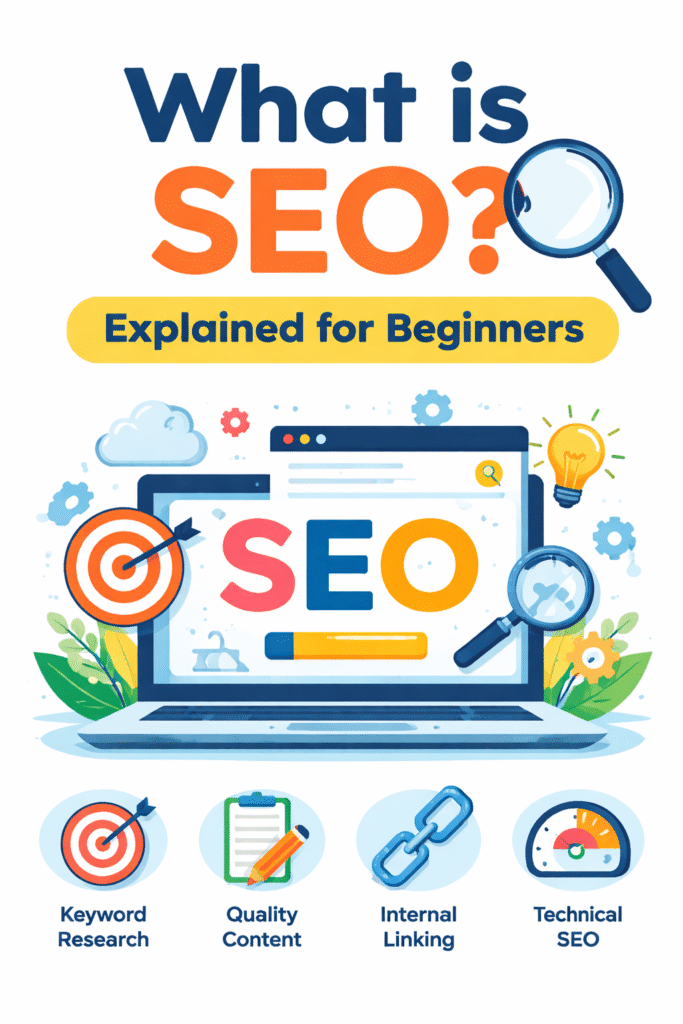
What is SEO and why does it matter for bloggers today?
Many beginners start a blog believing that publishing good articles is enough to attract visitors. I believed the same thing when I started writing online.
I published posts regularly, shared ideas, and hoped search engines would bring readers to my website.
But nothing happened.
The problem wasn’t effort or creativity. The real problem was that I didn’t understand search engine optimization.
In 2026, creating helpful content is only part of the equation. Search engines must also understand your content clearly. That is exactly where SEO becomes essential.
If you want to understand how all SEO elements work together, you can explore the AI SEO Content System for Creators, which explains the complete workflow for building search-optimized blog content.
Table of Contents
ToggleWhat Is SEO?
SEO stands for Search Engine Optimization. It is the process of improving website content and structure so search engines like Google can understand it and rank it in search results.
When a website is optimized correctly, search engines can match its pages with people searching for related topics.
SEO usually includes several activities such as:
keyword research
content optimization
internal linking
technical website improvements
Together, these practices help websites appear in organic search results and attract consistent traffic.
Why SEO Matters for Bloggers
Without proper optimization, even valuable articles may remain invisible.
Search engines evaluate millions of pages every day. They must decide which content deserves to appear in search results.
When your website follows SEO best practices, it becomes easier for search engines to:
understand the topic of your article
match it with relevant searches
recommend it to the right audience
For bloggers and creators, this leads to organic traffic, which means visitors arrive naturally from search engines.
If your blog already has articles but still struggles with visibility, you can read
How Search Engines Understand Content
Modern search engines are much more advanced than they were years ago.
Instead of simply scanning keywords, they now analyze:
user intent
content clarity
topical relevance
internal links
user engagement signals
Pages that clearly answer questions and provide useful explanations are more likely to rank.
Understanding how to structure articles properly is an important step for beginners. A practical explanation can be found in
On-Page SEO for Beginners.
The Role of Keywords in SEO
Keywords represent the phrases people type into search engines.
By understanding these phrases, bloggers can create content that matches real search queries.
For example:
Broad keyword
SEO
Long-tail keyword
SEO tips for beginner bloggers
Long-tail keywords are often easier to rank for because they are more specific and have lower competition.
Learning how to identify these keywords is an important skill. A simple method is explained in
AI Keyword Research for Small Blogs.
Technical SEO Basics
Technical SEO focuses on how well a website functions behind the scenes.
Even excellent content may struggle to rank if technical issues exist.
Some important factors include:
fast page loading speed
mobile-friendly design
secure HTTPS connection
clean website structure
accessible pages for search engines
These technical elements help search engines crawl and understand your website efficiently.
Common SEO Mistakes Beginners Make
Many beginners face problems because they misunderstand how search optimization works.
Some common mistakes include:
targeting extremely competitive keywords
publishing content without research
writing articles without clear structure
ignoring internal linking
creating generic or repetitive content
Choosing the right topics is essential for long-term growth. If you want ideas with lower competition, you can explore
Official SEO Guidance
Search engines recommend creating helpful content designed primarily for users.
According to Google’s helpful content guidelines, websites should focus on creating content that is useful, reliable, and written for people rather than search engines.
Understanding these recommendations helps bloggers build websites that perform better in search results and provide real value for readers.
How Long Does SEO Take?
Search engine optimization is a long-term strategy rather than a quick shortcut.
For most websites, noticeable results appear within three to six months. The timeline depends on several factors, including competition, content quality, and website authority.
Consistency is often the most important factor.
When bloggers combine helpful content with a clear SEO structure, search visibility improves gradually over time.
Frequently Asked Questions
What does SEO stand for?
SEO stands for Search Engine Optimization. It refers to improving a website so search engines can understand its content and display it in search results.
Is SEO difficult for beginners?
SEO can seem complex at first, but beginners can learn the basics by focusing on helpful content, keyword research, and clear article structure.
Do small blogs need SEO?
Yes. SEO is essential for small blogs because it helps them compete with larger websites by targeting specific search queries.
How long does SEO take to work?
SEO results usually appear within several months depending on competition, consistency, and the overall quality of the website.
Final Thoughts
Search engine optimization is not about tricking algorithms.
It is about helping search engines understand valuable content.
When bloggers combine helpful information, clear structure, and consistent publishing, search engines can connect their articles with people searching for those topics.
Over time, this process leads to sustainable growth and long-term visibility online.

Fatima is the founder of SmartCreatorAI25, a blog that helps creators and bloggers use AI tools to grow smarter online. She shares practical guides about AI writing, monetization, and smart productivity.